Rainbow Gradient Backgrounds: Vibrant Design Assets
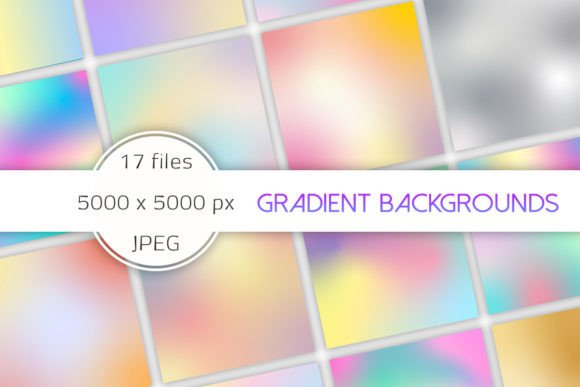
When you're working on a project that needs immediate visual impact, the background is rarely just a backdrop—it's the foundation of the mood. The Rainbow Gradient Backgrounds collection is designed to serve exactly that purpose. This isn't just a set of colors; it is a curated suite of 17 high-quality, square-format textures (5000 x 5000 pixels) that offer a blend of soft pastels, vibrant neons, and deep cosmic hues. Whether you are a graphic designer building a brand identity, a small business owner creating social media assets, or a crafter looking for the perfect base for a digital sticker, these abstract gradients provide a polished, professional starting point.
Visual Characteristics: Beyond the Standard Gradient
The strength of this collection lies in its versatility and texture. Unlike flat, one-dimensional color transitions, these files feature a distinct visual personality. We are talking about a mix of smooth blends, soft blurs, and subtle mesh effects that give the images depth. You will find designs that range from the ethereal—think soft pinks and blues blending into a magical sky—to the electric, with neon oranges and yellows that feel like a summer festival. There is also a distinct "holographic" quality to several of the files, mimicking the shiny, iridescent effects currently trending in modern typography and web design. The resolution is crucial here; at 5000 pixels, these assets are robust enough for print design and large-format posters, ensuring your brand identity remains crisp across all mediums.
Real-World Applications for Creators and Businesses
Understanding where to deploy these design assets is key to maximizing their value. Because these are abstract textures rather than rigid seamless patterns, they excel in static compositions where you need a distinct focal point.
- Logo Design and Branding: If you are building a brand identity for a beauty brand, a tech startup, or a lifestyle blog, these gradients can be clipped into text or shapes to create a vibrant logo. The "unicorn" and "magic" aesthetic works exceptionally well for brands targeting a younger, creative demographic.
- Social Media Graphics: Platforms like Instagram and Pinterest are crowded. A colorful backdrop makes text pop. Use these as the base for quote cards, sale announcements, or podcast covers. The square format is perfectly optimized for social feeds.
- Packaging and Product Design: For physical products, these textures can be used as box inserts, tissue paper prints, or label backgrounds. The pastel options are excellent for seasonal packaging, such as spring or holiday collections.
- Digital Stationery and Crafting: For the hobbyists and Etsy sellers, these files are ideal for creating digital papers, greeting card fronts, or scrapbooking elements. Since they are textures for cutting shapes, you can easily overlay them in software like Canva or Photoshop to create custom stickers and decals.
Integrating Gradients into Modern Typography
One of the most effective ways to use this collection is to pair it with strong typography. In editorial design and poster design, a busy background requires a readable foreground. When using these rainbow textures, consider using a bold sans serif font or a heavy display font for your headlines. The lack of serifs helps the text stand out against the organic shapes of the gradient. If you are going for a more whimsical look, a clean script font can work, provided the color contrast is high enough.
However, readability is the priority. Avoid placing long paragraphs of body text directly over the most saturated parts of the gradient. Instead, use the gradient as a window—perhaps applying it to the first letter of a drop cap, or using it as a shape mask behind a white text box. This approach maintains the professional look of your creative font choices while utilizing the energy of the background.
Practical Tips for Selection and Usage
With 17 options included, choosing the right file can sometimes feel overwhelming. Here is a practical workflow for integrating these abstract backgrounds into your next project:
- Evaluate the Color Temperature: Look at the dominant colors in the gradient. If your brand utilizes cool tones, the blue-to-purple cosmic blends will ensure consistency. For high-energy campaigns, the yellow-to-orange summer blends convey happiness and urgency.
- Test for Texture Compatibility: Since these are not seamless patterns, they work best when used at their native aspect ratio or cropped intentionally. Don't try to tile them; instead, treat them as standalone photographs.
- Consider the "Cut" Factor: The product description mentions these are for "creating and cutting shapes." In practice, this means you can use masking tools to cut out specific geometric forms (circles, triangles, abstract blobs) from the 5000px file to use as floating design elements. This is a great way to add decoration without overwhelming the layout.
- Check Commercial Licensing: Always ensure your usage aligns with the licensing terms provided. Whether for personal use or commercial distribution, respecting the asset's terms protects your business and supports the creator.
Ultimately, the Rainbow Gradient Backgrounds collection is a versatile toolkit for the modern content creator. It bridges the gap between raw texture and polished design, offering a quick way to inject magic, color, and life into your digital and print projects. By treating these assets as tools for visual hierarchy rather than just decoration, you can elevate your work from standard to striking.