Blue Stripe Watercolor Backgrounds: A Designer's Guide to Soft Pattern Assets
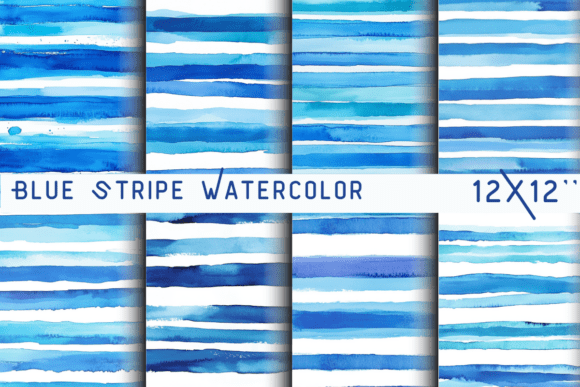
When you need to add texture and movement to a layout without overwhelming your typography, the solution often lies in the background. Blue Stripe Watercolor Backgrounds offer a specific kind of visual anchor: they provide the organic, hand-painted feel of watercolor art combined with the structural stability of vertical lines. This digital pack is not just a collection of images; it is a toolkit for establishing a serene yet structured atmosphere in your creative projects. The collection features twelve distinct high-resolution designs, each capturing the nuance of soft brush strokes, flowing paint lines, and elegant minimal patterns.
Understanding the Visual Character
The appeal of this scrapbook paper set lies in its ability to balance chaos and order. Watercolor, by nature, is unpredictable. The paint bleeds, pools, and creates unique edges that digital tools struggle to replicate perfectly. By pairing this organic medium with the horizontal rhythm of stripes, the designers have created a background that feels grounded. The color palette is deliberately curated to evoke calmness and clarity, utilizing Sky Blue, Navy Blue, Baby Blue, Soft White, and Powder Blue. These are not harsh, neon blues; they are sophisticated, muted tones that work well in professional environments.
Visually, the "hand-painted" aspect is crucial. In an era where digital perfection can sometimes feel sterile, these backgrounds introduce a human element. You can see the texture of the paper grain and the variation in pigment density. This makes the Blue Stripe Watercolor Backgrounds ideal for projects that require a touch of warmth. Unlike a flat vector stripe, these lines breathe. They provide a modern typography foundation that allows text—whether it is a bold sans serif font or an elegant script font—to sit comfortably on top without getting lost.
Practical Applications for Modern Creators
The versatility of this digital pack extends far beyond traditional scrapbooking. While they are perfect for junk journals and ephemera sheets, their utility in commercial design is significant. For entrepreneurs and small business owners, these assets solve a common problem: how to create brand collateral that looks premium without hiring a photographer for custom background shoots.
Here is how different professionals can leverage this set:
- Brand Identity and Stationery: If you are building a brand identity for a wellness coach, a spa, or a boutique hotel, consistency is key. These backgrounds can be used for business cards, letterheads, and thank-you notes. The soft blue tones communicate trust and reliability, which are essential pillars for service-based businesses.
- Digital Marketing and Social Media: Content creators often struggle with "background noise" in their Instagram grids or Pinterest pins. A clean, painted stripe provides a resting place for the eye. Use these files as the base for quote graphics or promotional banners. Because the files are 300 DPI and 3600x3600 pixels, they remain crisp even when cropped for different social media aspect ratios.
- Publishing and Editorial Design: In book design, the cover sets the tone, but the interior pages matter too. These watercolor stripes work beautifully as chapter dividers or page borders in editorial design. They add a layer of sophistication to packaging design as well, particularly for products that want to convey an artisanal or eco-friendly quality.
Technical Quality and File Utility
One of the most overlooked aspects of design assets is the file format and resolution. This collection is delivered in PNG format, which ensures transparency compatibility in some contexts, though these specific files are opaque. The 300 DPI resolution is the industry standard for print quality, meaning you can scale these up for physical products like gift wrapping paper or large-format signage without pixelation.
The file sizes (ranging from 8 to 18 MB per page) indicate high data density. This is a positive attribute for designers; it means the color gradients and brush details are preserved with high fidelity. When using these in software like Adobe Photoshop or Canva, you will find that the blending modes interact beautifully. For example, placing black text over the lighter powder blue areas creates a high-contrast, readable composition, while white text over the navy blue stripes offers a classic, maritime feel.
Strategic Integration with Typography
A background is only as good as the foreground it supports. When pairing Blue Stripe Watercolor Backgrounds with fonts, you must consider legibility first. Because the background features distinct lines and texture, you should avoid using a handwritten font or a highly decorative display font for large blocks of body copy. The visual noise will compete with the text.
Instead, opt for a clean serif font or a geometric sans serif font for the main content. These typefaces have clear shapes that cut through the watercolor texture. For headlines, you can afford to be more adventurous. A bold modern typography style with tight kerning can look stunning against the loose, flowing lines of the paint. The contrast between the rigid digital text and the organic paint strokes creates a dynamic visual hierarchy that engages the viewer.
When evaluating your project fit, consider the "personality" of the stripe. A Navy Blue vertical stripe suggests authority and structure, making it suitable for corporate reports or formal invitations. A Baby Blue horizontal stripe feels more casual and approachable, perfect for a baby shower invitation or a lifestyle blog header. By selecting the specific design within the pack that matches your message, you ensure that the background enhances rather than distracts.
Maximizing Your Investment
For those working within a commercial font and asset licensing framework, the value of a pack like this lies in its reusability. You are not buying a single image; you are acquiring a library of textures. To get the most out of the Blue Stripe Watercolor Backgrounds, experiment with layering. Try placing a solid white shape over the stripe to create a "window" for your text, or use the stripe as a border element rather than a full-page background.
Ultimately, these backgrounds are tools for visual storytelling. They set a mood instantly. Whether you are designing a wedding invitation, a website hero image, or a set of planner inserts, the combination of watercolor fluidity and stripe structure provides a reliable foundation for creative font pairings and professional layouts. They bridge the gap between digital precision and artistic expression, making them a staple for any designer's digital toolkit.